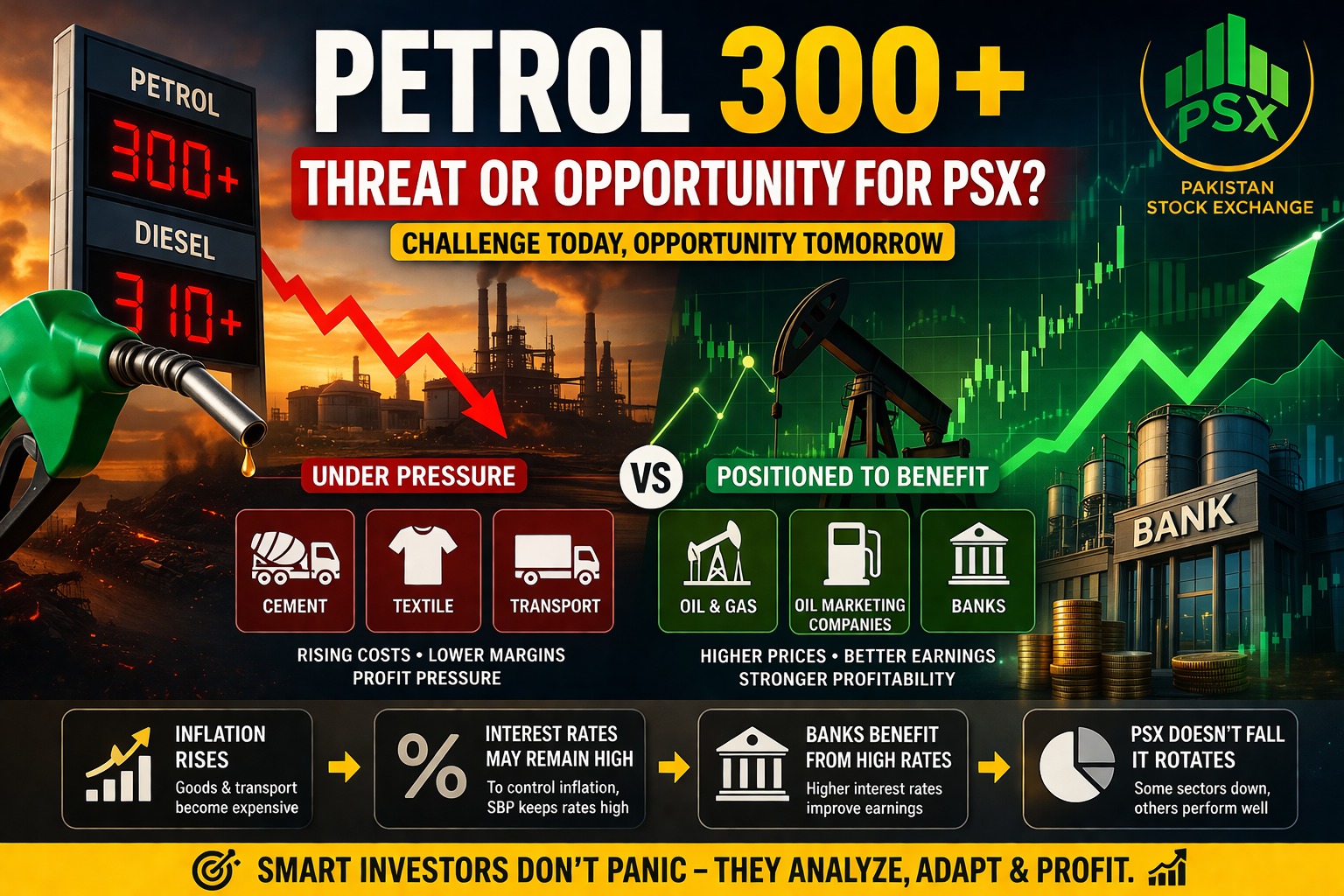
The crossing of petrol prices above 300 in Pakistan is not just a problem for the common man—it is also a significant development for the stock market. When fuel becomes expensive, its impact is not limited to transportation costs; it also affects corporate profits, inflation, interest rates, and overall market sentiment.
The real question for investors is:
Is this purely a threat, or does it also present an opportunity?
Key Points:
- Oil & Gas sector may benefit
Companies like OGDC, PPL, and PSO can perform better due to higher oil prices. - Cement, Textile, and Transport sectors face pressure
Rising fuel costs increase expenses, leading to lower profit margins. - Inflation rises
Higher petrol and diesel prices make transportation and goods more expensive. - Interest rates may remain high
To control inflation, the central bank may keep interest rates elevated, putting pressure on businesses. - Banks benefit from high interest rates
Higher rates can improve bank earnings and profitability. - PSX does not necessarily fall—it rotates
Some sectors decline, while others perform well under the same conditions.
Conclusion:
Petrol crossing 300 is not just a crisis—it is also a signal for investors to understand the market on a sector-by-sector basis. Not every negative headline impacts the entire market equally. A smart investor identifies which sectors are under pressure and which are positioned to benefit.
In PSX, every challenge is not a threat—sometimes, it becomes an opportunity.
.png "Share Buybacks: Case for KOHC and NetSol")